Manga vs Manhwa vs Manhua: What's the Difference?
Japan, Korea and China. Same word, three different traditions, and a quick way to tell what you're reading.
If you’ve ever called Solo Leveling a manga in front of someone who knows their stuff, you know how that conversation ends. The short answer is the country of origin: manga is Japanese, manhwa is Korean and manhua is Chinese. The long answer is more interesting, because all three share a word but went down very different paths.
One word, three languages
Manga, manhwa and manhua are written with the same characters of Chinese origin (漫畫), which roughly mean “spontaneous sketches”. In Korean it’s written 만화 and pronounced manhwa; in Chinese, manhua. In other words, in their own languages all three words simply mean “comics”. The distinction is something readers abroad came up with.
The differences at a glance
| Manga | Manhwa | Manhua | |
|---|---|---|---|
| Origin | Japan | South Korea | China (also Taiwan and Hong Kong) |
| Reading direction | Right to left | Vertical scroll on webtoon; left to right in print | Vertical scroll online; left to right in mainland China |
| Color | Almost always black and white | Full color on webtoon | Almost always full color |
| Typical format today | Magazines and collected volumes | Webtoon for phones | Webcomics in apps |
| Genres you’ll see most | Everything, from shonen to slice of life | Regression, hunters, murim | Cultivation, xianxia, overpowered villains |
Manga
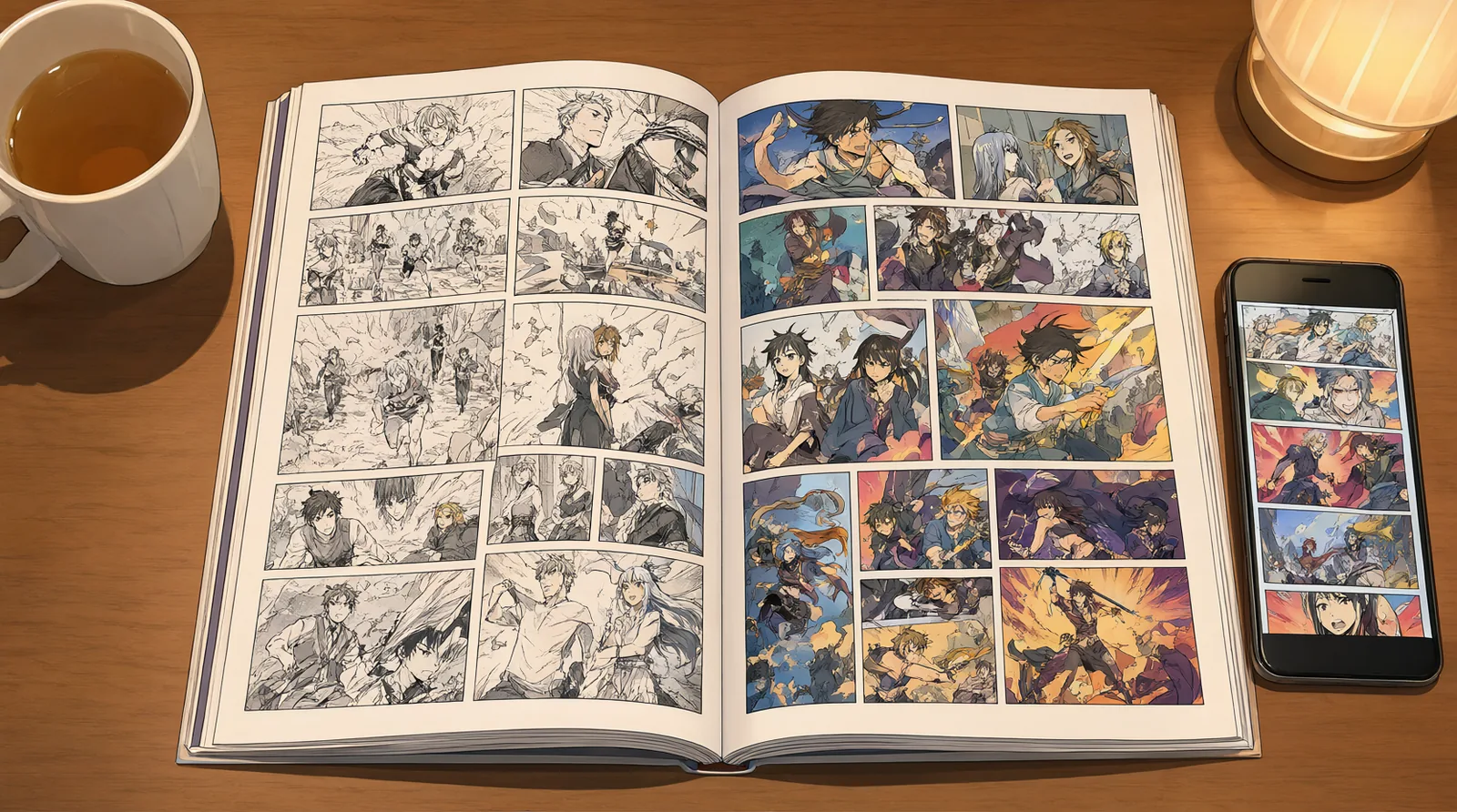
It’s been in the West the longest and it set the rules: black and white, read right to left, serialized in magazines and later collected into volumes. If you’ve ever read a Japanese comic in print, you already know the format.
Manhwa
Traditional manhwa was printed and read left to right, like a Western comic. What changed everything was the webtoon: Daum launched the first service in 2003, and Naver followed soon after and made vertical scrolling the standard. Chapters built to be read with your thumb on a phone, in full color, with a weekly release schedule that hooks you like a TV show.
That’s where today’s dominant genres come from: regression, hunters, dungeons, murim. If you want a place to start, try manhwa like Solo Leveling and the best murim manhwa.
Manhua
The term took on its modern meaning in 1925, and today manhua lives mostly on webcomic apps, heavily influenced by the Korean webtoon format: full color and vertical scroll. Where it really stands apart is subject matter. Cultivation and xianxia (martial arts with a Chinese twist of immortality and spirituality) are its home turf, with protagonists who tend to be overpowered very early on.
Two examples that often sneak into manhwa lists: I Am the Fated Villain and Log Into the Future, also known as Logging 10,000 Years into the Future. Both are Chinese.
How to tell them apart in five seconds
- Check the names. Kim, Lee, Park or Jin-woo point to Korea. Gu Changge or Lu Sheng, to China. Kenji or Sakura, to Japan.
- Check the color. Black and white is almost always manga. Full color could be manhwa or manhua.
- Check the direction. If panels run right to left, it’s manga. If you’re scrolling down with your thumb, it’s a webtoon, Korean or Chinese.
- Check the genre. Dungeons and regressors smell like manhwa. Cultivation sects and immortal realms, like manhua.
So which one is better?
Whichever you enjoy, obviously. In my case, I started reading manga very young, back in the days of the big three: One Piece, Naruto and Bleach. I’ve read hundreds of manga over the years, but lately I’ve been hooked on manhwa. Both the stories they tell and the reading format appeal to me far more. As for manhua, I’ve read a fair few, but in my opinion they’re a long way from Korean quality. Which one is your favorite?
Which one is your favorite?
Before you write:
Thanks! Your comment will appear once it's been reviewed.